Eye movements
How quickly and accurately the eyes respond to a task.
RetinaTek / Neurocognitive measurement
Objective, repeatable cognitive measurement. Built on research. In development for concussion recovery.
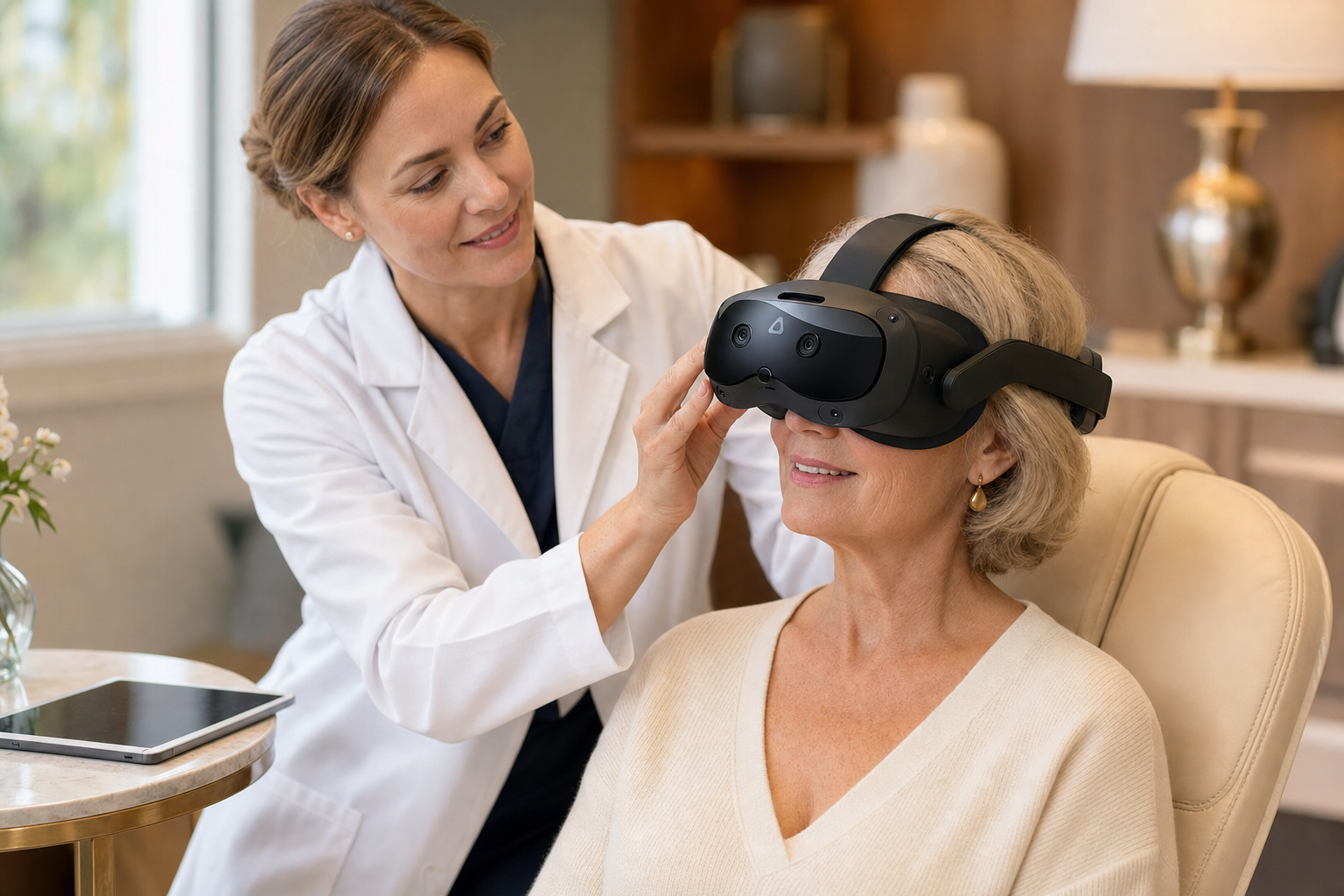
Controlled tasks. Eye movements. Pupil dynamics. Manual responses.
The RETINA platformThe measurement challenge
Concussion recovery is variable. Measuring it consistently remains a challenge.
Symptoms and clinical judgment remain essential. RetinaTek is developing a complementary way to measure cognitive performance under controlled demand, repeatedly and practically.
RETINA synchronizes eye movements, pupil dynamics, and manual responses during structured cognitive tasks. The question is how the brain controls performance under cognitive load, as task demands vary from trial to trial.
How RETINA measures performanceHow quickly and accurately the eyes respond to a task.
Changes in pupil response under cognitive load.
Response speed, accuracy, and consistency during the same task.
Scientific foundation
RETINA emerged from federally funded military and clinical research spanning attention, cognitive load, performance validity, TBI, and pupillometry.
Review the evidence and its limitsRead the peer-reviewed studies behind task-evoked measurement.
Biological plausibilityResearch links task-evoked performance metrics with MRI findings at the group level.
Measurement platformSee how synchronized signals become cognitive-performance outputs.
Research today. Clinical development ahead.
Concussion recovery is the commercial focus. Research use, the first clearance plan, and future condition-specific claims are distinct stages.
Current work
Observational work alongside usual care, building evidence on workflow, utilization, and data quality.
Discuss a sponsored pilotPlanned first submission
A computerized cognitive assessment aid. FDA feedback is informing the evidence and 510(k) submission plan.
Read the development planFuture clinical development
Condition-specific development for adult and pediatric concussion specialty care, subject to validation and clearance.
See RT-TRACERT-TRACE is not currently FDA-cleared, FDA-approved, or authorized to diagnose concussion or direct recovery decisions. Outputs do not currently determine diagnosis, treatment, benefits, or return-to-activity decisions. Disease-specific claims require appropriate validation and regulatory clearance.
Work with RetinaTek
For clinics, research teams, and sponsors building evidence in cognitive performance and concussion recovery.
Talk with our team